
Does your photo app ever send you down a memory lane rabbit hole? Google Photos did this to me over the weekend.
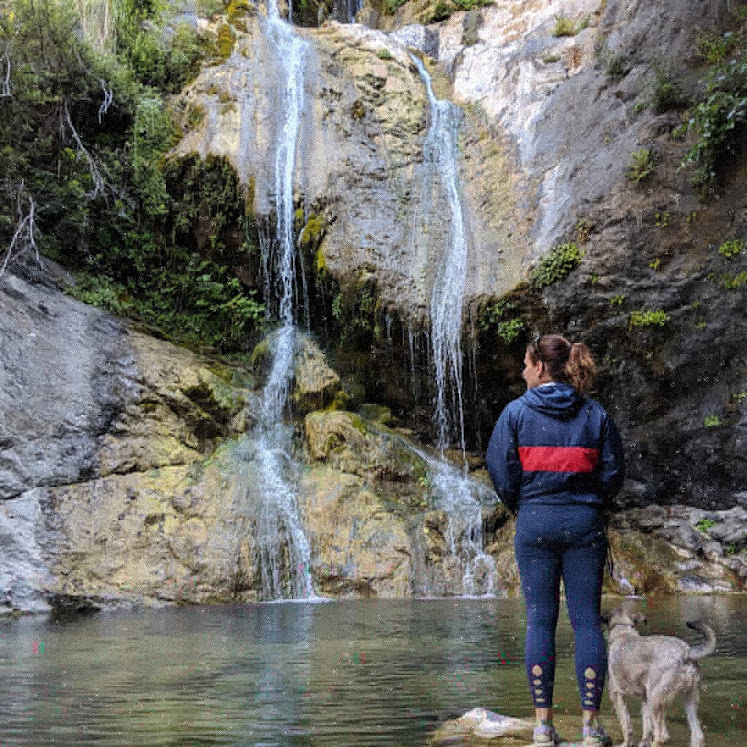
Six years ago this month, Matt and I took Maggie and Tres on a road trip up to Big Sur. We split our time between a hotel by the beach and a cabin in the woods. We picked lodging with them in mind and made arrangements at a local day boarding when we couldn’t take them with us. But aside from that, we didn’t give a second thought to taking them on this adventure with us. We were having a great time and so were our dogs, what could be better!

Fast-forward to April 2020. I adopted Rosie. I knew she was high-energy and had some “bite-inhibition issues.” But I didn’t know she was terrified of other dogs on walks. I didn’t know she would try to scale our fence every time she heard a noise on the other side. I didn’t know she would bark incessantly at anyone that came into our home.
Forget road trips. We couldn’t even get around the block.
I know when you adopted your dog you weren’t thinking, “I hope they hate seeing other dogs on walks! I hope they bark at everything when we go out together! Those will be fun and challenging things to work on together!”
Leash reactivity, stranger-danger, noise reactivity, car anxiety (or over-excitedness in the car), squirrel/bunny chasing…these are some of the most common issues I help dog parents with.
But what happens when you have a dog that has all of the above???
Here are 3 tips to help get you started. They are the lessons I learned from Rosie. When we rescued Mara in May 2023, I applied these 3 principles with her and prevented myself from spinning my wheels and getting burned out and overwhelmed.
When you don’t know where to start, start with these 3 things:
- Use management as much as possible
- Focus on one thing at a time (two at the MOST)
- Don’t skip the foundations
I have a lot to say about each of these things. In this post, we’re going to dive into management.
Management just means you are preventing the undesirable behavior (lunging at dogs, barking out the window, jumping on guests, etc.) from happening – no training required.
The goal of management is to immediately reduce stress for you and your dog.
Baby gates, ex-pens, white noise playlists, leashes, window film are just a few management options, depending on what you’re dealing with:
- A dog behind a baby gate can’t run through an open door.
- A leash prevents your dog from jumping on guests
- A white noise playlist buffers outsides sounds, allowing your dog to rest
- Window films blocks your dog’s view from seeing people outside
- Early morning walks means your less likely to run into other people/dogs
I think dog parents feel lazy by using management. And to that I say, work smarter, not harder.
Friends, not everything needs to be “trained.” Sometimes, you can use management forever. And there is absolutely nothing wrong with this.
When we rescued Mara in May of 2023, management was heavily used. She was not house trained. If my husband or I couldn’t watch her, that meant she was confined to a space area.
She really liked napping on the bed in my office but would explode into a barking frenzy if she heard a noise outside. Car door slams, diesel engines, barking dogs, people talking…it all set her off. However, if I played soft music or white noise, it buffered it just enough to help her relax more.
If you have a dog that has so many struggles, I recommend using management as much as possible at first. It’s so important to prevent your dog from rehearsing this undesirable behavior pattern, yes.
But when you have a dog with so many triggers, it can mean your dog is under high levels of chronic stress.
Chronic stress is the worst kind of stress. It can impact physical health and well-being in your dog. So by all means, use management to reduce these stressful reactions for your dog. It will benefit you too.
A lot of dog parents tell me they feel like their dog’s world is small when using management. You aren’t taking your dog out much, you’re avoiding walks at popular times, you aren’t taking your dog places.
But important things are happening. Think of it as providing decompression. If your dog has had a rough go, rest and recovery are vital. It’s like a reset.
Now, if you are eager to get to work, don’t think of this management/decompression period as a waste. This is also a great time to start planning your training approach and laying good foundations. Which I’ll talk about next time!
What management are you using with your dog? What are you going to start using with your dog?
Here for you,
Andrea
 Best Life Dog Training Blog
Leave a comment