-
Lessons Learned from Reactive Dogs
When I first started my dog training career, I had never heard of the concept of reactivity in dogs. I had never experienced a dog completely losing it at the end of their leash when another dog is near. I had never dealt with a dog that was fearful of noises. And I certainly never had a dog that was scared or showed aggression toward people.
But then I (inadvertently) started working with a reactive dog. And about a year later, I (unknowingly) adopted a dog with reactivity struggles. And nothing has been the same since!
As my reactive dog, Rosie recently celebrated her 4th birthday (or what we guess is her birthday), I reflected on how far we’ve come and all we have learned along the way. I thought I’d share a few of the lessons learned from working and living with reactive dogs.
#1 – Reactivity has zero to do with obedience and everything to do with an emotional response.
I still remember this handsome Golden Retriever we’ll call Ty. He and his dad walked into the store where I worked as a dog trainer and wanted to sign up for classes. Ty’s dad told me he really wanted help with leash walking when other dogs were around. He was such a well-trained dog, but when he spotted another dog while out on a walk, he would “lose it” and lunge, bark, and snap at the other dog. It was all his dad could do to hold on to the leash.
So we signed them up for 6 one-hour sessions on Monday evenings.
We focused on loose leash walking and gave a high rate of reinforcement (fancy way of saying a lot of treats for doing things we like). I introduced as many distractions as I could inside the walls of the store (squeaky toys, sudden direction changes, treats on the ground, etc.) but Ty was solid. This dog did amazing on the leash. If he did ever create tension on the leash, he seemed to know how to fix it himself.
I tried to come up with a few new tricks to teach like crawl and rollover. He picked up on new tricks very quickly (and many tricks I wanted to teach he already knew). Ty would happily do just about anything for a little piece of jerky.
The point is, Ty was an extremely well-trained dog and his dad was very good with his own timing, mechanics, and reinforcement.
Mondays were usually very slow in the store so it was not until session 4 that I experienced the behavior Ty’s dad described in our initial conversation.
We were practicing loose leash walking in the back of the store and we rounded the corner into the main aisle. We were all the way in the back, but had a clear line of sight directly to the front door of the store. And in walked another dog. I can’t tell you what the dog looked like because it instantly became a situation of holding on to the leash for dear life and getting Ty AWAY from that dog.
His dad took the leash and literally pulled Ty away. I tried giving Ty a treat but it was like I was invisible. That’s when I realized that this had nothing to do with “training” or Ty not listening or being “obedient.” Something much more was going on.
A reaction is the behavior that you see. But what is actually going on is an emotional response as a result of what happens in the brain. The limbic system, the amygdala in particular, triggers the fight/flight/freeze response. This heightened emotional state that the dog is in can cause increased heart rate, increased blood pressure, increase of cortisol and epinephrine.
To truly treat reactivity, you must address and change the dog’s emotional response.
And that leads to my next lesson learned…
#2 – Treating reactivity is not training.
Dog training is what I did at the store when I first started in the field. I taught group classes and private lessons. We covered the basics and good manners. I had a few repeat clients that just loved coming to classes so I got to teach some fun tricks every once and awhile too. The most difficult thing I had to work with was “teenage dogs” (5 months – 24 months, depending on breed) that seemed to have forgotten all previous training and were now driving their guardians a little bit nuts.
A dog training session might be teaching your dog behaviors like sit, touch, stay, or rollover. While you may use these cues in treating reactivity, training your dog alone is not going to be enough to treat the reactive behavior.
You must also be doing desensitization and counterconditioning. Treating reactivity is behavior modification and it requires a more scientific, methodical, and systematic approach. Recording and analyzing data become important.
#3 – Reactivity stirs up big emotions for the guardians, too.
I cannot think of one single client that came into the store that was really struggling with their dog’s behavior. Sure, there were plenty of annoyed or frustrated dog guardians (see previously mentioned teenage dogs). But for the most part, having a dog was close to what they expected and their issues did not really impact their daily lives or well-being.
Guardians of reactivity dogs, on the other hand, often tell me they are exhausted by their dog’s behavior. They feel ashamed. They feel isolated. They feel misunderstood, often by family and friends (I could write a whole post about societal expectations for dogs based on inaccurate, out-of-date info).
Many guardians of reactive dogs have gotten emotional in my presence. They always apologize, but it is not necessary. Because what they feel is real. It is valid.
They got this dog and expected this wonderful, loving relationship. But then, after living with the dog for some time, they learn their dog has some very real, very concerning behavior issues.
They can’t take their dog for a walk. They can’t have people over to their home anymore. They can’t take their dog places like they hoped.
Reactivity impacts their lives almost if not daily. However, we also need to remember my next lesson learned…
#4 – Reactivity is NOT the dog’s whole personality.
One of my favorite questions to ask potential and new clients is “tell me about your dog’s personality.” They almost never mention their dog’s behavior problems. But rather, they often describe all the cool things about their dog. How they greet them with a full body wiggle after a long day at work, or the silly way they sleep with their legs in the air, or the amazing agility and tricks they can do.
Rosie, my own dog, is leash reactive and a frustrated greeter when it comes to people. I feel bad when people see this side of her. Because the remaining 99% of the time, she’s fun, goofy, smart, curious, cuddly, and sweet. She loves learning new things and really enjoys a good bully stick. She sleeps on my feet as I type this blog post.
I encourage you to do this too. Remember all the cool things about your dog. Maybe even write them down to read on the more challenging days. Your dog is so much more than their behavior problems.
#5 – Body language is so powerful.
Canine body language is SO fascinating to me, but it wasn’t always like that. I remember my first dog training mentor educating me and the other mentees about canine body language. It was discussed in the context of “puppy playtime,” a 30-minute session twice a week where puppies under 5 months old who were up-to-date on vaccinations could come and play with other puppies.
A trainer (myself or the other trainer at the store) would supervise. We were to look out for play that got too rough and separate when needed. It wasn’t too hard to spot when things were ramping up a bit too much.
But to get really good at reading dog body language takes practice. Three tips:
1. Definitely record training sessions and interactions with your dog and re-watch them. This is invaluable to becoming a better dog communicator.
2. Context is important. Look for behavior that is repeated in similar contexts. For example, if your dog trembles and their head is on a swivel, scanning all around as soon as they go outside. If this is normal behavior, your dog could be overwhelmed and fearful. But if the behavior isn’t always occurring, it could be something in the environment, like wind or changes in barometric pressure, that has your dog on edge.
3. Learn your dog’s more subtle signs of stress. Sure, most guardians know what a reaction looks like for their dog. But what does it look like when your dog is only mildly stressed? What behaviors does your dog display before a reaction occurs? What about after a reaction, how does your dog calm themselves?
A warning about learning your dog’s more subtle body language – you can’t unsee it! I had a habit of approaching Tres, my mini-Schnauzer mix, head on to give him kisses and face scratches. But then I noticed he would turn his head away and lick his nose as I walked toward him – even if I was bringing him a piece of yummy food for him. The act of me walking directly to him making eye contact was a bit much for him. So now, I approach in an arc and avoid eye contact. It’s much less pressure on him.
What about you? What lessons have your reactive dog taught you? Tell me in the comments!
-
Do you have agency in your dog behavior modification plan?
I recently conducted a survey asking guardians about their experience with their reactive dogs. I asked things like where they were now vs. where they wanted to be, what their goals were, and how their dogs’ behavior impacted their lives.
Many of the answers were common things I hear from guardians of reactive dogs. However, there was one underlying theme that surprised me.
Read through the following comments can stop and think what comes up for you:
“One trainer recommended we pop her collar, but I just couldn’t do that.”
“The trainer was really focused on using BAT but in our busy city neighborhood, we couldn’t make it work.”
“A prong collar was suggested but that was a hard no for me.”
“We tried using LAT but now I feel anxious, always scanning for triggers.”
What strikes me is the complete disregard for the guardian’s agency.
I think anyone who is in the R+ community understands the importance of giving dogs a sense of agency and recognizing consent in our dogs. And I totally agree.
Why wouldn’t the same be true for the human end of the leash?
The method, technique, and recommended equipment are irrelevant (some were +R/force-free that I use myself). What matters is the guardians were not given a choice. They did not buy into the proposed solution.
If you are not on board with what is being recommended, it is a non-starter right out of the gate.
Think about a time when you *had* to do something, you did not have a choice. And you found that something to be quite unpleasant. How does that make you feel? What is your reaction?
When I worked in corporate America, I was hired on by a company to fill a particular position. I had a background in the company’s industry and was interested in the work my team would be doing. Fast forward about 2 ½ years, I was feeling like a productive, valuable member of the team and I was comfortable in my role. But then I was told that I was being transferred to another team doing different work (and a lot more of it) on a project I found incredibly dull and boring. Oh, and no raise.
I went to my current boss to plead my case. I did not want to go to this team for a LOT of reasons. My boss, an understanding, effective, fair manager, was sympathetic to my plight. But his hands were tied. Go to this new team or be out of a job.
What do you think happened?
I’ll spare you all the tears and anxiety. I lasted a little over 2 years and then I quit.
It wasn’t until a few years later, after studying and researching behavior science, that I understood the science behind what happened.
What IS agency, anyway?
Agency is the capability of individuals to make choices and to act on those choices in ways that make a difference in their lives. (2)
In psychology, agency is the ability to act autonomously and freely, feeling that one is able to act independently and effectively to control their own lives. A common goal in therapy may be to help people act autonomously in a way that works best for their individual needs and lifestyles.
People who feel that they do not have any agency may be anxious or depressed, and may struggle with motivation or procrastination (1) (see my story above).
Why Agency Is important for behavior modification
Let me be honest. Taking on a behavior modification plan for your reactive dog requires change for the humans involved. And change is tough. To make change effective and sustainable long-term, we must consider agency. Science tells us that there are 4 components to agency: intentionality, forethought, self-reflection, and self-regulation. (3)
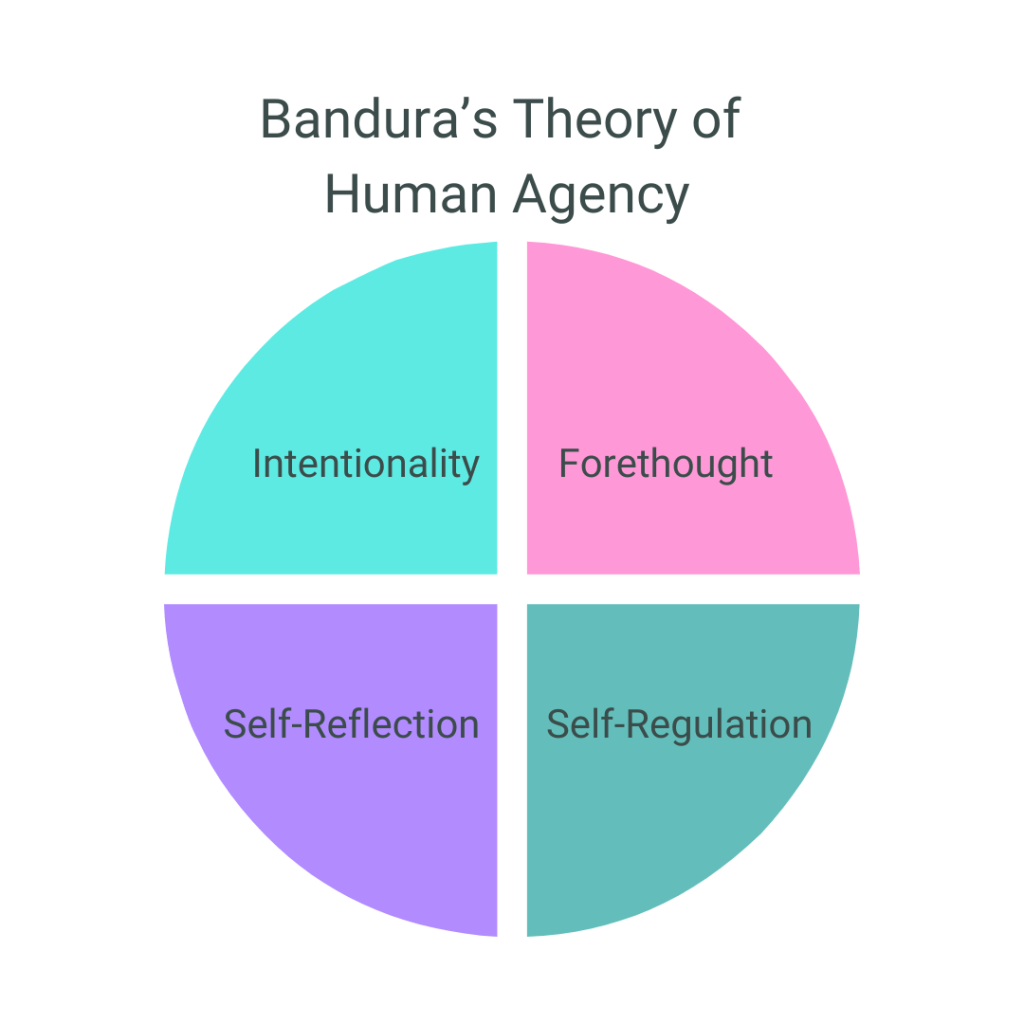
Bandura’s Theory of Human Agency (3) Let’s break each of these down and apply it to working with dogs.
Intentionality
This refers to an awareness to conduct yourself and your actions in a certain way based on an idea or goal. It is important that the actions you take are clearly tied to a goal. You conduct yourself differently to achieve a certain outcome. If you are practicing a skill or cue with your dog, with no real understanding how it is going to get you closer to your goal of getting your dog more comfortable around people, you are not going to be effective in adhering to the plan because the purpose and the intent is not there.Forethought
Because you are now becoming more intentional, the ability to think and plan ahead comes into play. You guide your actions in anticipation of future events. You are more aware of what situations your dog is likely to be successful in (or not) and plan ahead to increase the likelihood your dog will stay relaxed. You are also able to plan training sessions ahead of time because you have intentionality behind the action you are taking.Self-reflection
This is an active, constructive process where you set goals and then attempt to monitor, regulate, and control your cognition, motivation, and behavior. This is the step beyond setting goals and taking action. Once action is taken, you track progress over time. Have progress markers for yourself, not just your dog. This is key to know if a behavior modification plan is having the desired effect.Self-regulation
This is a functional self-awareness in which you reflect on your personal efficacy, thoughts, actions, the meaning of their pursuits, and make corrective adjustments if necessary. You are able to objectively look at the results of your data collection and evaluate your own progress and current path. Yes, it is important that your training plan is yielding positive change for your dog. But how are you feeling? Is your training schedule leaving you drained and exhausted? Do you find certain techniques or methods recommended by the trainer to be anxiety-inducing?If a trainer is telling you what to do and handing you a behavior modification training plan without any input from you, they are not considering YOUR agency.
Everyone has their own lives, schedules, thoughts, habits, likes and dislikes. For long-term sustainability (which is important for addressing reactive behavior), it is important that the guardian buys into the plan. An easy way to do this is to work with a trainer collaboratively to set goals and structure a plan that works for you. This is the approach I take with the guardians that work with me. Without it, we are not considering the most important aspect in helping the dog: the guardian.
What thoughts come up for you after reading this? Do you feel a sense of agency when working with your dog?
REFERENCES
- Frie, R. (2008). Psychological agency: Theory, practice, and culture. Cambridge, MA: MIT Press.
- https://www.frontiersin.org/articles/10.3389/feduc.2020.00019/full
- Bandura’s Theory of Human Agency (Bandura, 1986, 2000, 2001, 2006)
-
Equipment for less reactive, more relaxing walks?
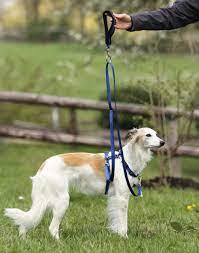
I recently wrote about my favorite harnesses and leashes. Honestly, whether or not your dog is reactive, those are two solid pieces of equipment to have so be sure to check out that post. Walking your dog on a longer leash might be a new and different concept for you, but I encourage you to try it out.
Today, I want to review some other equipment options for you and your reactive dogs. These pieces of equipment can help you feel safer, which is a key component to feeling more relaxed and calm on walks. As an added bonus, both of the pieces of equipment I’m going to talk to you about today can help reduce tension in the leash.
Sounds pretty good, right?
One note…
Hopefully, you read my previous post on equipment and either felt relieved because you already were using a front-back clip harness for your dog OR you were so inspired you got a new front-back clip harness. The 2 pieces of equipment I’m covering today require a body harness with a front and a back clip.
Ttouch Connector
If you are frustrated by your dog’s pulling or you are just a little nervous about having only one point of contact on your dog, the Ttouch Connector is something worth checking into.
That’s not a typo, by the way. Ttouch is short-hand for Tellington Touch.
It looks like a “V” with two clips at each point and a metal ring at the base. Attach your leash to the metal ring and then attach the 2 clips on the Connector to your dog’s harness.
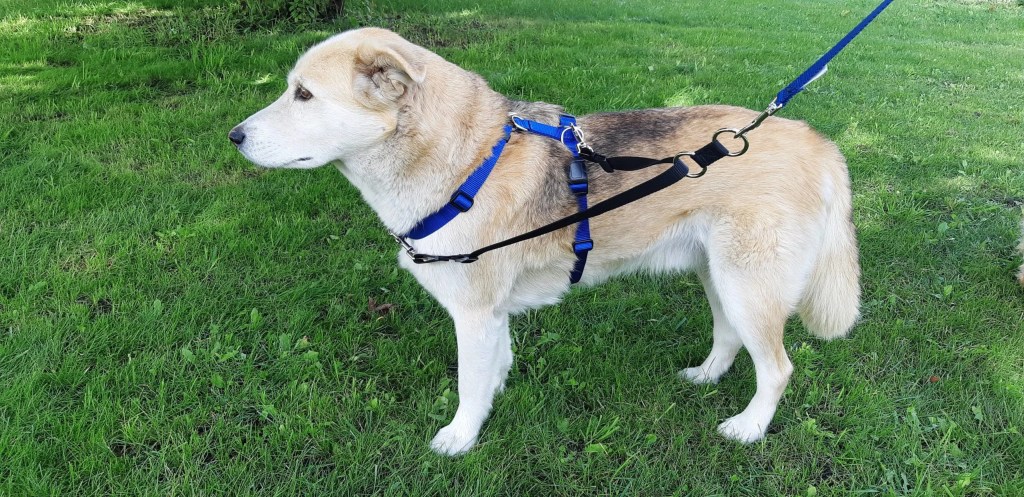
Why I love it:
- Can use it with any leash and it’s very quick and easy to attach
- Two points of contact can provide additional peace of mind for the guardian
- Helps the dog stay in balance (weight evenly distributed over all paws)
- Gives the dog a little extra length (freedom) which is a nice option particularly in urban settings where a long leash isn’t ideal
- Requires absolutely no new leash handling skills to learn
- Relatively inexpensive
- Can help deter leash pulling (compared to a back-clip harness or standard collar)
- Surprise bonus: the leash got caught under my dog’s front leg way less often compared to using the front-clip alone
Ttouch Harmony Handle (formerly called the Freedom Handle)
The Harmony Handle is really nice if you have a tendency to tense up and hold the leash tight when you see one of your dog’s triggers. It’s ok if you’ve done this – it’s human. This tool uses a swivel to help the leash stay loose, even if you get tense.
The Harmony Handle requires a leash that attaches to both the front and back clips of your dog’s harness. Then a handle slides around the leash on a metal clip and swivel.
The handle attaches to the leash with a metal clip and swivel 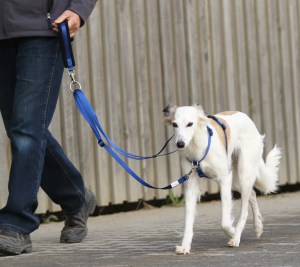
The Harmony Handle requires a special leash that attaches to both clips on the harness Much like the Connector, the Harmony Handle helps keep the dog in balance, reducing tension on the leash. And you get the two points of contact.
Honestly, the Harmony Handle has many of the same pros as the Connector. However, you will likely need to purchase a special leash as well and that makes it a little bit more expensive. You can see the whole set here.
Why does “getting the dog in balance” matter?
Think of it as good posture. You want to see your dog with weight evenly distributed between all paws and joints in alignment. The dog should not be leaning forward, rounding the spine, or hunching over. Staying in balance reduces stress on joints and prevents injury. It also makes for more enjoyable walks with your dog!
One more note…
There is no single piece of equipment that is going to resolve all the behavior issues for your dog. But the right piece of equipment can be an important part of the equation and make dog walks less stressful.
Have you used either the Connector or Harmony Handle? Will you be trying them after reading this? Let me know how it goes and what your experience is!
-
Onions, haunted houses, and behavior
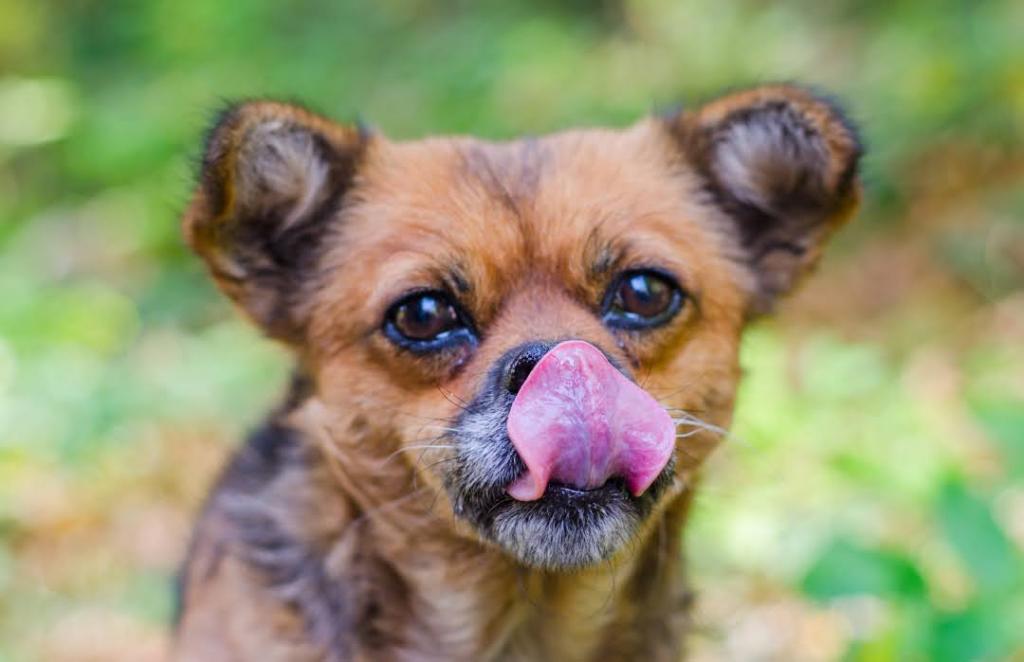
Almost every time I chop an onion, my eyes get red and water and my nose runs…it’s a lot. I basically look like I’ve been ugly crying and it takes me a few minutes to recover even after the onion is put away.
I was well into a good onion-cry while making dinner the other night and my husband, Matt, walked into the kitchen to talk to me. I had my back to him so he couldn’t see my face until I turned around to face him, in search of a tissue.
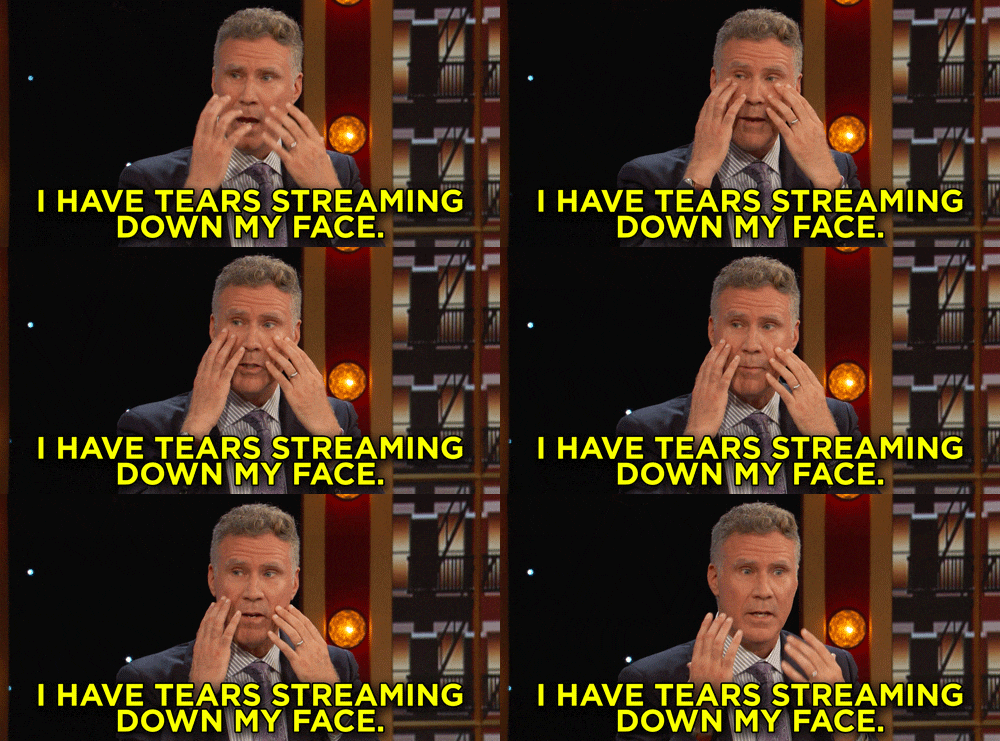
“Whoa, what’s going on? Are you OK?” he asked me. Then he sees the onions behind me and kindly offers to chop the rest of the onions. Because he’s a nice guy and immune to the effects of onions.
I know I am not unique in my reaction to onions. So, what does chopping onions have to do with dog behavior?
It is a reminder to focus on the behavior you see and refrain from attaching emotion to it (at least until you have more perspective and context).
I wasn’t sad or upset. My eyes were watering and my nose was running.
In Lili Chin’s book, “Doggie Body Language” she describes how misreading dog body language can complicate life for dogs and their humans. This book helps you recognize the subtle cues your dog gives that can be easily missed.
Not an ad. I just truly love this book. Check it out. It’s a great book and the illustrations are cute. Get it. Leave it out on your coffee table for all your guests to browse. The world needs to know about this book. Well, at least anyone who interacts with dogs.
I digress…
What I want to encourage you to do is when you catch yourself saying your dog is happy, excited, afraid, frustrated, or aggressive, instead take a moment to observe the actual behavior you can see.
Even if you are an expert at interpreting your dog’s body language, it’s a good practice to make sure you are staying sharp and picking up on all those subtle cues like lip licks and head turns.
Lip lick (when food is absent) can mean your dog is feeling uneasy. ❌Rather than: My dog is being an aggressive jerk to other dogs
➡️ Try this: My dog is lunging and barking at other dogs while on leash.❌ Rather than: My dog is an inconsiderate, embarrassing attention-hog when I have guests come over.
➡️ Try this: My dog is jumping and mouthing at my guests.❌Rather than: My dog is protecting me from strangers that get too close
➡️ Try this: My dog barks at strangers that get within 10 feet of me.❌Rather than: My dog is happy because their tail is wagging
➡️ Try this: My dog’s tail was wagging up high at a fast pace.Why does this matter? You may be wondering. Why do you need to pay attention to the behavior that you see instead of what your dog might be feeling or thinking?
Focusing on the behavior you see puts you on the path to:
🧐 Objectively observe behavior (see examples above)
🥸 Gather more science-based, non-biased info
🙋🏻♀️ Seek out help from a professional if needed
📊Form educated theories and training plans to address your dog’s behavior
✨Change how you interact and work with your dog.It’s important because it changes how you respond.
You understand that your dog isn’t being an aggressive asshole but more likely wants to create space because of he/she is feeling uncertainty or anxiety.
You understand your dog isn’t trying to be rude to your guests but rather is having trouble managing their excitement and self-regulating.
You understand that your dog isn’t likely trying to protect you from strangers, but rather fearful of the stranger getting too close.
You understand that a wagging tail does not necessarily mean a happy, confident dog.
You are able to better help your dog because you have a better understanding of their perspective.
That’s empathy. (Which is one of the 5 Steps of Emotional Intelligence. But that’s a post for another day).
You understand that punishing your dog for “misbehaving” is futile, and even damaging.
You begin to meet your dog where they are at and help them overcome their emotions.
You understand that your dog is experiencing fear, anxiety, uncertainty, frustration…all things we all have felt ourselves. Those are big emotions.
And we may behave differently when those emotions are very intense.
Case in point. I do not go to haunted houses (or watch scary movies, or go on haunted hay rides…) Because the fear is just so intense to me. I know it is not real but it’s just not my idea of a good time. 🤷🏻♀️
No judgment if this is your thing! You are a brave soul with nerves of steel.
So yes, in a way we come full circle because now you do end up identifying emotions your dog is likely feeling.
But now, we are doing so from a more objective, science-based, non-bias perspective.
In a future post, I’ll be diving into the fear response in dogs that will give you further perspective and insight!
Tell me in the comments!
➡️ How has your perspective changed on your dog’s behavior? -
Does your dog have bad habits?
My dogs (Tres and Rosie), my husband (Matt), and I moved to a new home just a little over one year ago. Our new neighborhood is tiny. To walk our entire neighborhood requires one lap around an oval, less than 1 mile all the way around. Very small. No side streets to detour. No dumpsters to hide behind when another dog is coming. And it seems like everyone has a dog and nearly all the dogs are leash reactive.
Before we moved, Rosie (my reactive dog) was seeing big improvements in her noise sensitivity, impulsivity, and staying calm around people. We were seeing progress on her leash reactivity, but it had been slow. I was worried about how the move was going to impact the little progress we had made.
To my surprise, her leash reactivity lessened in intensity after our move.
The dog trainer in me knows better than to take good behavior for granted, so I rewarded her calmness heavily and we continued on our leash reactivity behavior modification plan. Fast forward to the present day, and she has significantly less reactions than before, and when she does react, it is less intense and she recovers much quicker.
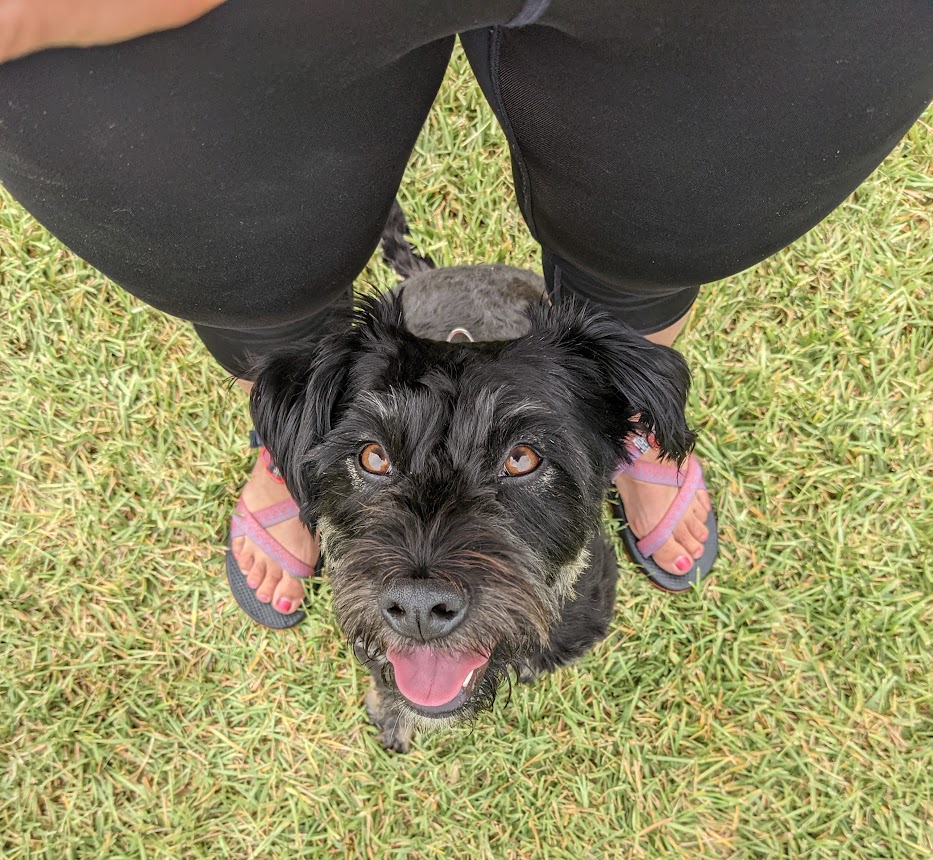
Rosie taking a break on a neighborhood walk So, what, if anything, did moving have to do with Rosie’s progress?
The Habit Discontinuity Hypothesis could be at play here.
What the Habit Discontinuity Hypothesis tells us is that behavior change is more effective in the context of major life changes, like moving to a new home. Shortly after the life change, people showed an increase in behavior flexibility, were more likely to make changes, and form new habits than people who had not moved. This window lasts about 3 months.
Most of what we know about habit is in context to humans. But we may be able to apply this to our dogs through the lens of reactive behavior.
But first, we need to understand the ways in which dogs learn.
Intentional or Habit?
To understand how habits relate to your dog’s reactive behavior, let’s first look at 2 ways dogs learn: Goal directed vs. habit. It is not just semantics. Goal-directed and habit behavior are processed in different areas of the brain.
Goal directed behavior is action-outcome. For example, you ask your dog to “sit” and then you give your dog a piece of cheese. The dog’s behavior is driven by the value of the reinforcer (cheese, in this case). The behavior is under conscious control and is flexible.
Habit driven behavior is automatic, with no intentionality. If the action-outcome contingency changes, the behavior does NOT change. The behavior is NOT under conscious control and is rigid and inflexible.
What does habit have to do with reactivity?
Let’s say your dog is leash reactive. When you are out on a walk and if your dog sees another dog, he reacts by barking and lunging at the other dog. And likely, that other dog goes away.
What can happen is after MANY repetitions of that sequence, the behavior is now triggered by simply the context of seeing another dog. There is no intentionality, the reactive behavior is NOT driven by the outcome of the other dog moving away.
Wondering if this could be your dog? A sign of habit-driven behavior (instead of goal-directed behavior) is your dog continues to react even after the other dog has gone away.
Worried your dog has formed some bad habits?
There is a study that says changing context alone may be enough to change habits to goal-directed behavior. While going to a different neighborhood or location can be helpful, you still need to be thoughtful in your approach. Here’s some tips:
- Be intentional in selecting a new location. Make sure that spot is minimally distracting. Scope it out ahead of time without your dog to plan exit routes, and how you want to conduct your training session.
- Old habits can emerge when the dog is tired, stressed, challenged, frustrated. That reactivity is more likely to come out again.
- I know a lot of you are in busy city settings. If at all possible, go to a different location with less distractions, less stimulation to get in those good practice repetitions. If that isn’t possible, going to a different neighborhood can be helpful as well.
- The longer the reactive behavior has been going on, the longer you may have to spend doing practice repetitions – with no trigger present. The more good practice you do when no trigger is present, the easier it will be for your dog to do the behavior when a trigger IS present.
- Return to the original context (when applicable) only when the new behavior is fluent in the new context.
Have you moved with your dog? How did the move impact your dog’s behavior?
Until next time,
Andrea
-
What equipment do I need to walk my reactive dog?
As I was getting Tres and Rosie ready for our walk the other morning, I realized a common question I get asked is:
What equipment do I need to work with my dog, around reactivity specifically?
So in today’s post, I’m going to share some of my favorite pieces of equipment for leash walks.
I should first mention that no piece of equipment is going to resolve all your leash pulling or leash reactive issues. Equipment can be a helpful piece of the equation, though. The right equipment can also make the walk safer, reducing stress for the guardian and the dog.
See? Important stuff! Let’s dive into it!
There are 2 pieces of equipment I want to cover with you today: harnesses and leashes.
Harnesses
I LOVE a body harness over a traditional collar any day. I do not use a collar on walks because of the pressure it puts on very sensitive areas of your dog. The collar goes around the spine, thorax, esophagus, blood vessels, and numerous nerves.
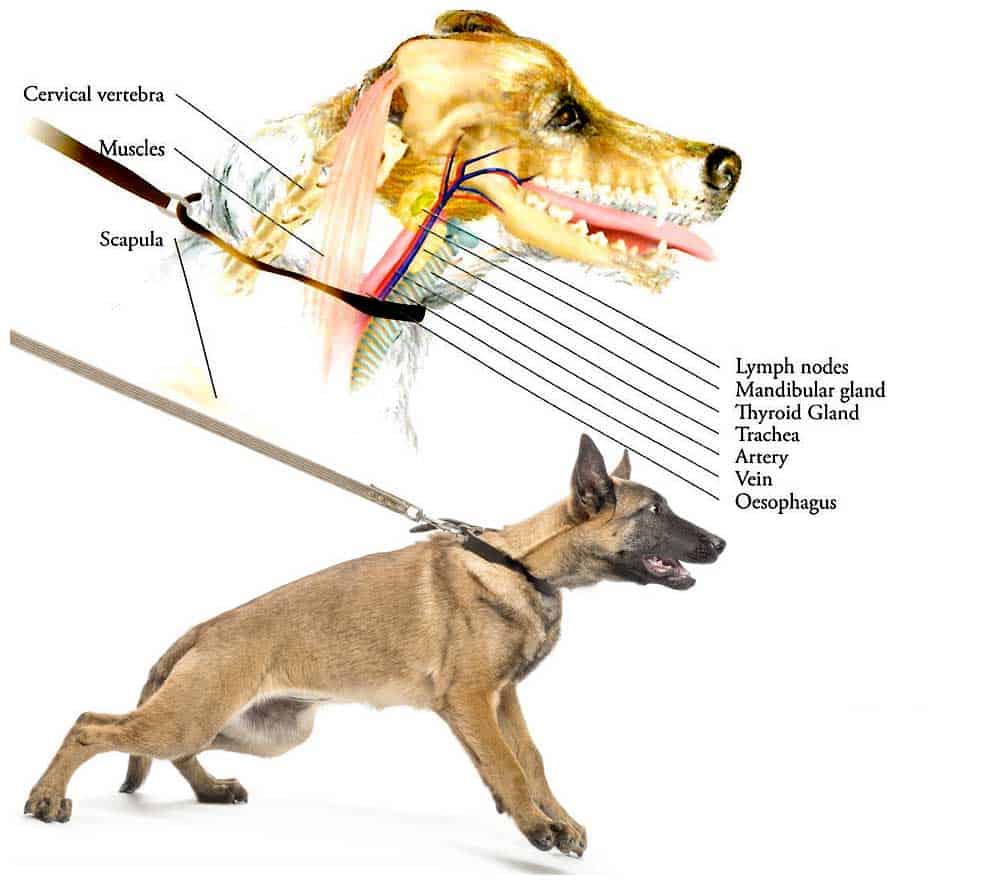
Rehab Vet Image A body harness puts no pressure on the neck. Rather, it distributes the weight across the body.
So if you get nothing else from this post, other than to use a harness over a collar, that is a win for the day!
Now let’s cover some specifics about harnesses. There are back clip and front clip harnesses. The majority of harnesses at pet stores are back clips (the leash attaches to the harness in between the dog’s shoulder blades). A front-clip harness attaches near the dog’s sternum, in the chest area.
The shape of the harness is also important. Look for a harness that is a “Y” fit. The straps should NOT go across the dog’s shoulder blades as this can impact their gait. A “Y” fit harness will go down the center of the dog’s chest.
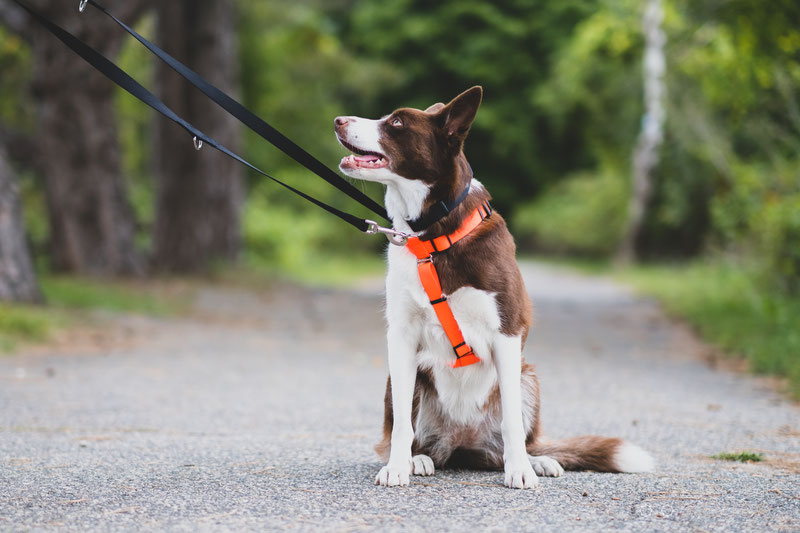
Y-Fit Harness My favorite harnesses have BOTH a front and a back clip (which you’ll see why in a little bit).
Sometimes, back-clip harnesses can encourage leash pulling. A pattern forms where the dog pulls, they get to go forward. Front-clip harnesses can be helpful if your dog is a strong puller. But remember, no piece of equipment is a magic fix. You still need training to teach your dog how to walk nicely on a leash.
Two of my favorite harnesses are:
Two Hounds Design Freedom Harness
I use the Balance harness on both my dogs daily. I love all the adjustable points, it makes getting a good fit really easy. I have had my current harnesses for over 2 years and use them about twice a day every day and they are holding up nicely.
Tip: If you opt for the Balance harness, I recommend getting a color other than black. The different color goes down the spine of your dog (whereas black, it’s all the same color). The different color makes that strap easy to spot for quick dressing.
I have also used the Freedom harness and I like it as well. What I love about the Freedom harness is the inside part that touches the dog’s belly is lined with a velvety material. If your dog is sensitive to chaffing or has really short hair, this could make the harness much more comfortable.
Leashes
I know most of us use a standard 6 ft. leash. Most days, I am walking both my dogs at the same time so I am using a 6 ft leash with each of them. But in a perfect world, leashes would be 10+ feet long, ideally 15 and even up to 50 feet!
Why a longer leash? A lot of loose leash walking issues can be resolved with a long line simply because dogs walk faster than us. Having more slack in the leash gives them freedom of movement which can reduce frustration and gives them the option to move away if they want.
You do need to get good at your leash handling skills, but it’s worth your time.
My favorite long leash is nothing fancy, but I do love the material biothane. It is soft rubber, it feels nice in your hands, doesn’t knot up as easily, and it’s a breeze to clean.
A note about retractable leashes: Opt for a non-retractable when possible. I understand that some folks need retractable leashes for mobility. But if you are trying to teach your dog to walk nicely on a leash, a retractable leash could be making the process confusing for your dog in that when they pull on the leash, they get what they wanted (more freedom and movement). The goal is to keep the leash loose. A longer leash and good leash handling skills are excellent ways to accomplish that!
What equipment do you use to walk your dog?
Until next time,
Andrea
References:
https://rehabvet.com/cat-dog-blog/harness-versus-collar/ -
Hi and Welcome!
Hi there, I’m Andrea, the human behind Best Life Dog Training. I’m happy to have you here!
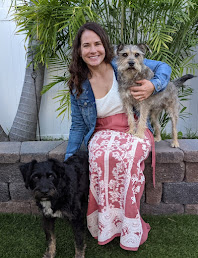
Welcome to my blog where I focus on all things reactivity, hyperactivity, and impulsivity. If you want a deeper understanding of your dog and what you can do to overcome undesirable behaviors like lunging on a leash, barking out the window, or jumping or growling at guests, then you are in the right place. I get into the science of dog behavior, body language, learning theory, behavior modification, and a little bit of genetics all for the purpose of improving the lives of reactive dogs and their guardians.
Working with guardians whose dogs are struggling with reactivity, hyperactivity, and/or impulsivity is my passion. These dogs are often misunderstood. They are struggling to cope in our human world and need the help of a patient and educated guardian to overcome their emotions.
While I had worked with numerous clients with reactive dogs, it was not until April of 2020 that I lived with one. I understand firsthand what it’s like to just white-knuckle it through a walk, a car ride, a visitor, and even just an ordinary day.My husband and I adopted Rosie early in the pandemic (like many people around that time). We had 2 dogs at the time. Maggie was our senior labradoodle (15 years old at the time) and Tres is our mini-Schnauzer mix and he was 5-6 years old at that point. I did not realize Rosie was reactive initially. I knew she was high-energy, did not have bite-tolerance (she play-bit REALLY hard), was unsure of small dogs, and may have slept in a car a few nights (due to her original family not being able to find pet-friendly housing). It’ll be fine, I told myself. I’m a dog training. We’ll get on a plan right away, and everything will be great!
The first day we brought Rosie home, she jumped so high she nipped me on the back of the head while I was standing up. She used our bodies like her personal springboards, she lunged at every dog, person, child, and thing “out of place” on walks, she reacted to every person that came into our yard, she barked at all the sounds, and she paced and whined on car rides. Every time I walked across the shared yard to the laundry room, she would nip at my arms and ankles. There was a two-story apartment building and the staircase overlooked our backyard. Rosie would jump/climb/scale our fence trying to get to people on the staircase. It was overwhelming and incredibly stressful. It’s like she was never relaxed, she was always on and ready to go.
I’m thankful to say we’ve come a long way since then! Rosie still has her moments but her leash and noise reactivity are much improved, she is more relaxed around guests, and can lay down and relax during car rides. Oh, and the nipping/play-biting is a thing of the past – we addressed that first! We are not perfect, but we are improving over time. And our relationship is MUCH better now than it was then.
I’m telling you all this because I know how overwhelming it can be living with a reactive dog. You may be wondering if things will ever improve. It takes time, yes. But when you address behavior issues keeping the dog’s AND your own well-being in mind, things happen. You will become the expert on your dog and know what to do to address behavioral issues and see true, positive changes. All while building trust and a closer bond between the two of you.
I believe that addressing the human end of the leash, *YOU*, is of utmost importance. You are the most important piece of your dog’s reactivity recovery journey. While I strive to educate people on how a dog’s emotions impact their behavior, I also understand that your dog’s behavior can impact your emotions.
Think back to why you got a dog. Companionship, couch snuggles, exercise buddy. Perhaps you wanted to teach your dog fun tricks or take them hiking with friends. But instead, you feel like you are grieving for the dog you secretly wish you had. If you have a dog with behavior issues, you may have some emotions come up that you were not expecting. Embarrassment, guilt, disappointment, frustration, overwhelm, isolation, and maybe even hopelessness.
It’s OK to have these feelings. You are human. But I don’t want you to get stuck there. And I want you to know a better life is possible. Maybe not the one you originally imagined, but different and somehow, better.
My commitment to you is to share science-based, up-to-date, ethical, and humane training and behavior modification information to help your dog overcome their behavior struggles. Reactive dogs need us. They need understanding, educated humans with a plan. I love working with guardians to give them that plan.
I’m so happy you’re here. Leave me a comment and let me know your dog’s name and where in the world you call home.
Thanks for being here.

Best Life Dog Training Blog
Helping reactive dogs and their guardians live their best lives together
 Best Life Dog Training Blog